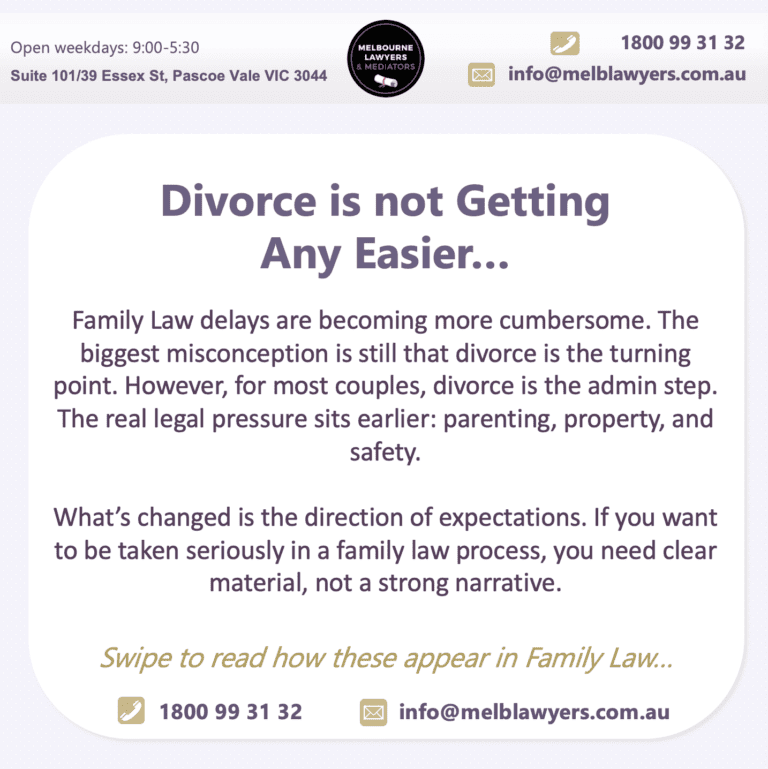
Separating from a partner can bring major changes to your home life, finances and family arrangements. Along with the emotional impact, you may suddenly need to make decisions about children, property, money and where each person will live.
Trying to resolve everything immediately can make an already difficult situation more stressful. Taking practical steps in the right order can help you understand your position and make more considered decisions.
Here are seven important things to consider after separating from your partner.

1. Confirm the Date of Separation
Start by making a clear record of when the relationship ended. The separation date can become important later, particularly if you are married and intend to apply for divorce.
In Australia, married couples generally need to be separated for at least 12 months before applying for divorce. Separation and divorce are different processes, so ending the relationship does not automatically mean you are legally divorced.
Keep a record of the separation date and any relevant communication confirming the relationship has ended. Having a clear timeline may help if questions arise during future family law proceedings.
2. Prioritise Your Immediate Safety
Safety should come before discussions about property, finances or other arrangements.
If the separation involves family violence, threats, intimidation or controlling behaviour, legal protections may be available. Depending on the circumstances, this can include seeking an intervention order.
Safety issues can also affect parenting arrangements, particularly if there are concerns about children being exposed to physical or psychological harm.
In circumstances involving allegations of assault, threats or other potentially criminal conduct, advice from a Criminal Lawyer Melbourne may also be relevant alongside family law advice.
3. Make Short-Term Arrangements for Your Children
If you have children, establishing practical arrangements for their everyday care will usually be an early priority.
Parents may need to discuss where the children will live, how much time they will spend with each parent and how responsibilities such as schooling and healthcare will be managed.
Parenting matters can include:
- where children will live;
- time spent with each parent;
- child support;
- visitation and contact;
- guardianship issues;
- grandparents’ rights; and
- relocation matters.
Where possible and safe, try to keep discussions focused on the children rather than disagreements between adults. Australian family law places significant importance on the best interests of children, including protecting them from physical and psychological harm.
4. Understand Your Financial Position
Separation can significantly change the financial circumstances of both partners. Before making decisions about property or money, develop a clear picture of your current position.
Gather relevant documents and information relating to:
- bank accounts and savings;
- property and significant assets;
- loans and other liabilities;
- superannuation;
- income;
- regular expenses; and
- other financial resources.
Property settlements may involve assets, liabilities and financial resources accumulated during the relationship. These issues can arise after both marriage and de facto relationships.
Avoid assuming that everything will simply be divided equally. The appropriate outcome depends on the individual circumstances of the relationship and the parties involved.
5. Avoid Rushing Into Property Agreements
It can be tempting to settle financial matters quickly so you can move forward. However, agreeing to sell, transfer or divide significant property without first understanding the consequences may create difficulties later.
Property settlements can involve more than the family home. Depending on your circumstances, there may be issues involving superannuation, liabilities, spousal maintenance, financial agreements and formal Court Orders.
An informal agreement between former partners may not provide the certainty expected. Formalising an agreement appropriately can help clarify each person’s financial position moving forward.
If disagreements develop into wider legal disputes, obtaining advice from Litigation Lawyers Melbourne may also help you understand available dispute resolution options.
6. Consider Mediation
Going to court is not always the first or only way to resolve disagreements following separation.
Mediation provides an opportunity for separating partners to discuss issues in a structured environment. It may be used to address parenting arrangements, property matters and other disputes.
For parents, mediation can be particularly useful when they need to continue communicating and making decisions about their children after the relationship ends.
However, reaching an agreement during mediation does not necessarily mean that agreement is legally binding. Depending on the circumstances, further legal steps, including Consent Orders, may be needed to formalise what has been agreed.
Where negotiation is appropriate and safe, resolving issues constructively may reduce conflict and provide greater clarity for everyone involved.
7. Seek Legal Advice Before Making Major Decisions
Family law matters can have long-term consequences, so it is sensible to understand your legal position before finalising important arrangements.
A family lawyer can explain the options that may apply to your circumstances, including matters involving:
- divorce and separation;
- parenting arrangements;
- child support;
- property settlements;
- spousal maintenance; and
- mediation and dispute resolution.
Getting legal advice does not automatically mean taking the matter to court. Early advice can simply help you understand your rights and responsibilities before you agree to arrangements that may affect your family and finances for years.
Conclusion
The first few weeks after separation can feel uncertain, but not every issue needs to be resolved immediately. Start with safety and short-term parenting arrangements, organise your financial information and avoid making significant agreements before understanding their implications.
Taking an organised approach can make it easier to address parenting, property, financial and divorce matters as you move forward.
If you are separating and need assistance understanding your family law options, Melbourne Lawyers & Mediators can provide guidance based on your circumstances and help you work towards an appropriate way forward.